
Few businesses are backed by a personal and professional story so closely intertwined with Japan. How did your journey begin—both personally and professionally?
Dr. Zoltán Sűdy:
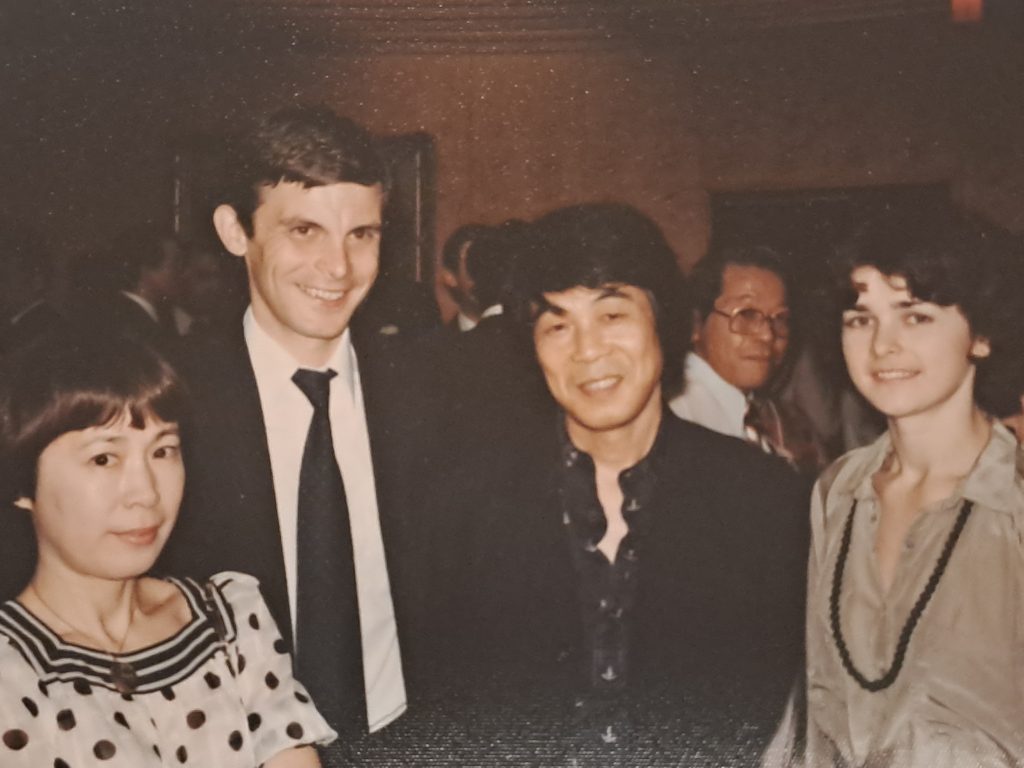
Erika and I met in 1975 under quite ordinary circumstances: in the dining hall of the Ministry of Foreign Affairs. Three young women were sitting at a table, and I thought there might be room for me as well. That was our first conversation. Neither of us suspected then that this moment would be the start of a decades-long shared story involving Japan, diplomacy, and later, entrepreneurship.
Our first "real" date was six months later, we married in 1976, and that same year, we set off on our first posting to Japan.
Japan played a major role from the very start of your relationship. How familiar was this world to you before your first trip?
Dr. Zoltán Sűdy:
I graduated in Japanese studies in Moscow at the University of International Relations, so I arrived relatively prepared from a linguistic and cultural perspective. Erika started learning Japanese during our honeymoon—my gift to her was a small language book. We literally went through the first lessons during our honeymoon.
We first moved to Tokyo in the fall of 1976, and this year we celebrate the 50th anniversary of our first personal experiences in Japan. This alone says a lot about how defining this country has become in our lives.
Erika Sűdy:
For me, Japan was not just a new culture but a continuous learning process. In addition to learning the language, mastering diplomatic etiquette and navigating a professional international environment within the unique Japanese culture was a challenge, as we both entered this new world as beginners. We absorbed experiences, adapted to the environment, and this helped us immensely in developing genuine relationships.
Many report that Japanese business and social culture is closed. What was your experience about this?
Dr. Zoltán Sűdy:
There is a lot of truth in that, which is exactly why we are needed. However, to be honest, we hardly encountered this "closedness." Language skills certainly mattered, but the attitude was just as important: respect, attentiveness, and sincere interest. We were accepted very quickly, and we formed relationships that have stayed with us for decades.
When did you realize that Japan-Hungary relations needed more than what diplomacy alone could achieve?
Dr. Zoltán Sűdy:
It became clear to me during my first service in Tokyo (1976–1980) that traditional diplomacy is not enough on its own. There was huge potential in economic relations, but there was a lack of participants who truly understood both sides—from a business, cultural, and human perspective.
As Ambassador (1995–1999), I often brought together promising Hungarian and Japanese partners, but I saw these collaborations often wither away because there was no one to guide them through the process. There isn't enough information, there isn't enough trust—and where this is missing, business doesn't work either.
This was the point where the idea was born: a consulting firm was needed to act as a bridge between the two worlds.
What gave the final push to start the business?
Dr. Zoltán Sűdy:
On one hand, professional experience; on the other, a very specific piece of feedback from Japan. During the farewell party organized at the end of my term as Ambassador, a high-prestige Japanese businessman (the then-president of the Asahi company) told me: "Sűdy-san, you should be in business; you need your own company." That sentence stayed with me for a long time.
When we returned home from Japan, we consciously took the risk. It was a greenfield investment, but we weren't starting from nothing: we had decades of diplomatic, economic, and social capital behind us.
Who was the first client who validated your decision?
Dr. Zoltán Sűdy:
Our first significant contract was with Graphisoft, followed by other collaborations. However, the real breakthrough came with a Japanese project related to Videoton in the early 2000s. This was a milestone in terms of both volume and impact: it affected hundreds of jobs and defined the company's growth trajectory for many years.
Many companies claim to have a "family atmosphere." What does this mean for you in practice?
Erika Sűdy:
Zoltán and I led the company together, and most of our colleagues belonged to our children’s generation. This inevitably created a parent-child-like sense of responsibility.
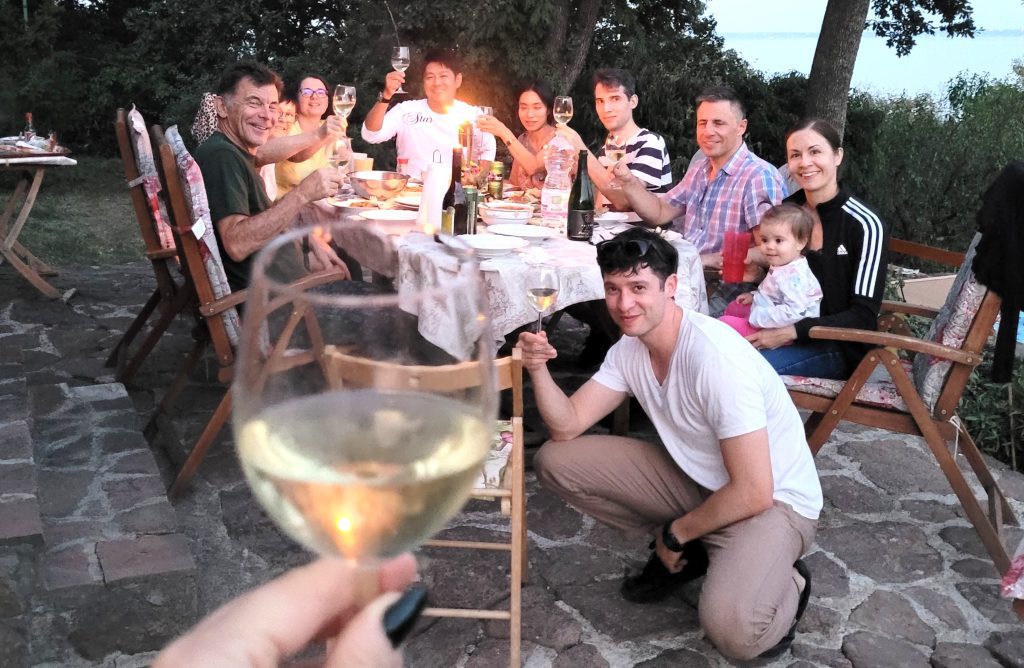
It was important to us that colleagues weren't just coworkers, but partners. We got to know each other thoroughly not just through work, but through informal gatherings, family trips, and celebrations. We looked out for one another—and in the long run, this became a force for retention.
What values did you—and do you still—look for in a new colleague?
Dr. Zoltán Sűdy:
Commitment to Japan, diligence, openness, and a willingness to cooperate. Learning the Japanese language and culture requires discipline and perseverance in itself—these kinds of people generally think long-term.
Part of our corporate culture is to seek the opinions of our staff on major, and often even minor, decisions. We involve them in interviewing candidates for new positions, and they receive regular updates on the company's financial situation. It is true teamwork.
Several Japanese colleagues have worked in the team throughout the company’s history. Why did you find it important to have Japanese colleagues, and what were your experiences with them?
Dr. Zoltán Sűdy:
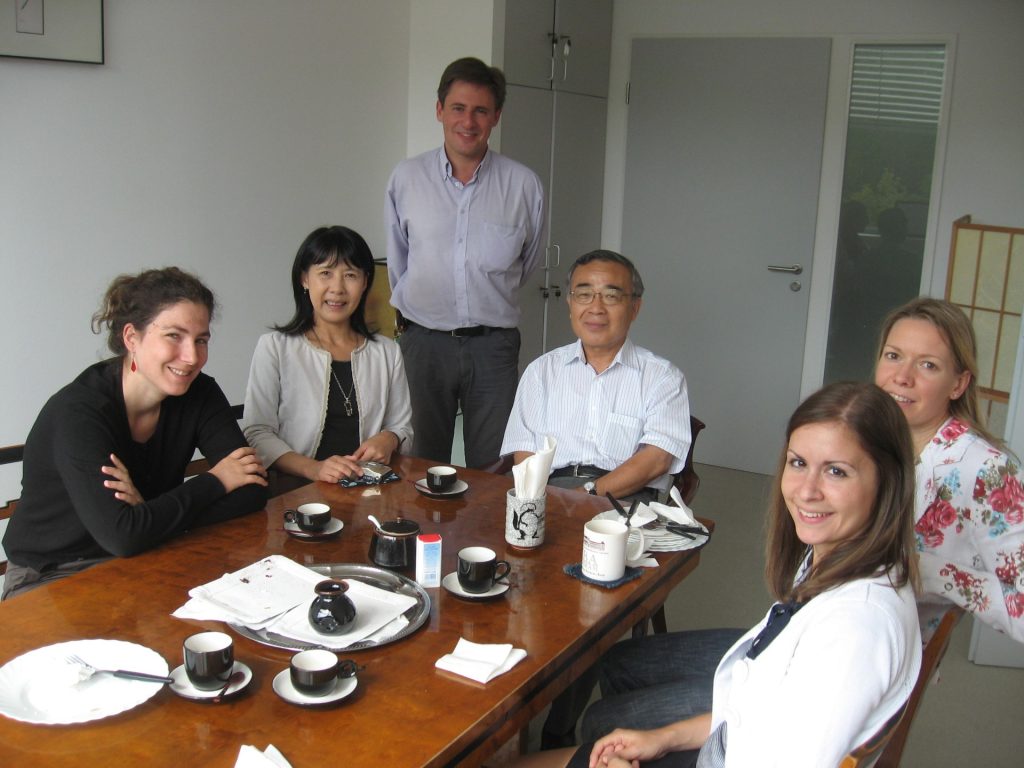
To answer the end of the question first: I am convinced that for a Japanese partner, the mere fact that a company employs a Japanese staff member is a trust-building factor. Regardless of my diplomatic background, ambassadorial experience, or awards, they are not worth as much as the fact that a Japanese businessman can talk to another Japanese person—in their native language, within a shared cultural context and framework of thought. Rather early on, in 2002, we hired a japanese colleague, who have been studying and then working in Hungary for a few years. She is still working with us today.
This is not just a symbolic issue, but one of great practical significance. In the Japanese business world, trust is built through personal channels, and the presence of a Japanese colleague is irreplaceable.
At the same time, experience showed that this alone is no guarantee of success. One of our Japanese colleagues arrived with a broad international background and serious connections. He was an extremely likable, well-meaning person who had a positive effect on the team spirit, and we learned a lot from him—especially regarding Japanese decision-making mechanisms and how to communicate with a Japanese partner. However, he brought fewer concrete business breakthroughs than we originally hoped.
Through later Japanese colleagues, we also learned that "there are great differences between one Japanese person and another."
Just as not everyone in Hungary is suited for sales or business development, the same applies to Japan.
Sűdy & Co. is known by many for its events. Besides business events, your company also considers organizing and supporting Japanese cultural events important, right?
Erika Sűdy:
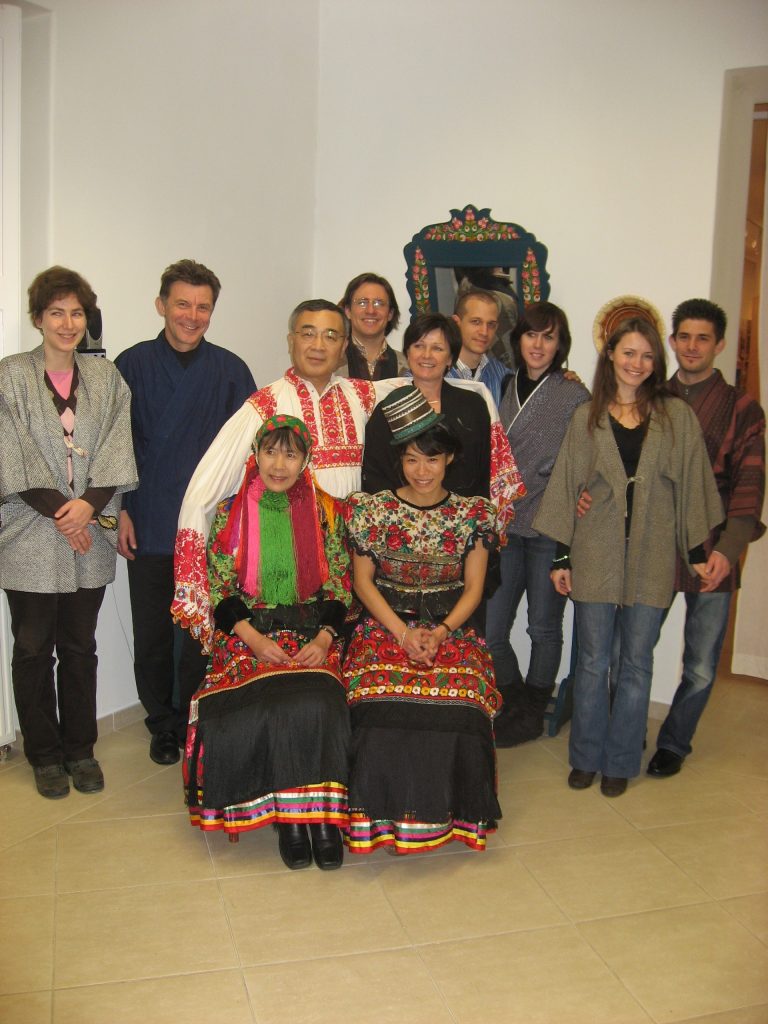
Yes. In addition to building business relationships, we felt it was important to bring the two countries closer culturally. We presented Hungarian artists in Japan and Japanese artists here at numerous exhibitions. Choirs came and went. We created a tradition by organizing a concert for Japanese students studying at the Liszt Ferenc Academy of Music for 15 years, a tradition that has now been taken over by the Hungary–Japan Friendship Society. For me, these were true passion projects.
Looking back on the past twenty-five years, what do you consider your greatest success or most important milestone?
Dr. Zoltán Sűdy:
It’s hard to highlight a single success because there were many moments that defined the company’s fate. If I think in terms of concrete business results, one of the most important milestones was definitely the establishment of the Brother–Videoton cooperation.
We looked for a supplier for Brother following an inquiry from a mid-level manager at a Japanese bank in London. Brother was facing serious difficulties in procuring printed circuit boards at the time. Although the parties had previously negotiated unsuccessfully, I was convinced the project was viable. After persistent coordination and a reconsidered approach, we eventually reached a point where more than two hundred people in Sárbogárd worked exclusively on circuit boards manufactured and assembled for Brother. This was not only a significant business success but also proved in the long term that industrial cooperation between Hungary and Japan is viable.
I view the Obayashi-Swietelsky consortium’s M4 metro project as an equally defining achievement. I considered it particularly important that a Japanese construction company should not enter a large-scale tender alone, but together with an experienced Hungarian partner. This strategy eventually led to success: it resulted in a multi-year, productive collaboration and a project that remains significant for Budapest today. These are the moments when you feel you have added real value to a process.
Erika Sűdy:
I approach the question slightly differently. For me, the greatest success is not tied to a single specific deal, but to how far we have come over the years. To the fact that the companies that have worked with us now recommend us to others with confidence and a good heart. The fact that we have come onto the radar of Western European companies looking toward Japan for their business strategy proves that our reputation is good and that we are needed.
This network of trust built over the last twenty-five years—made up of partners, returning clients, and personal recommendations—is, in my opinion, one of the company's greatest successes. This is something that can and should be built upon for the future.
We arrived in Tokyo in September 1976. I held the lowest diplomatic rank—assistant attaché (quite a humble starting point!) —and I was the only diplomat at the embassy who spoke Japanese. As a result, my list of responsibilities was rather diverse; practically everything ended up on my desk. My office was near the main entrance, so whenever a visitor spoke only Japanese, I was immediately called in.
One day, the Japanese secretary approached me, concerned. She said that a disheveled, shaggy-haired, casually dressed man had arrived without an appointment, and she wasn’t sure whether she should announce him to anyone at the embassy. “Well,” I thought, “what could someone with such an unusual, perhaps slightly inappropriate appearance want at the Hungarian embassy?” The situation intrigued me, so I decided to hear him out.
He was Dr. Masanao Murai, and from that meeting onward we worked closely together for years. I must admit, it was from him that I first heard about the Pető method—a specialized movement therapy used to treat children born with coordination difficulties. Murai sensei (if I may call him that) was a surgeon and a judo grand master. He had first come to Hungary because of the judo community in Tatabánya, but during his visit he also went to the Pető Institute. What he saw there inspired him to introduce the method—already internationally recognized at the time—in Japan, funding the initial efforts from his own resources. I found this noble goal worth supporting, and with my assistance, we were able to arrange a visa for the first young Japanese trainee to travel to Hungary for conductor training. Over the years, several Japanese students were trained at the Pető Institute and later applied their knowledge back in Japan.
Using their own wealth, and later with the support of an increasing number of donors, Murai sensei and his wife—also a doctor—established the first institution near Osaka, in Hiratsuka, called Warasibe Gakuen. Later, additional institutions were founded elsewhere in Japan. At that time in England, a Pető Institute operated under the patronage of Princess Diana. In Japan, Princess Takamado took on a similar patronage role, and supporters included former Prime Minister Tsutomu Hata and the renowned writer Ryōtarō Shiba.
Moral of the story: regardless of appearances, we should not trust only our eyes—listen to your heart.
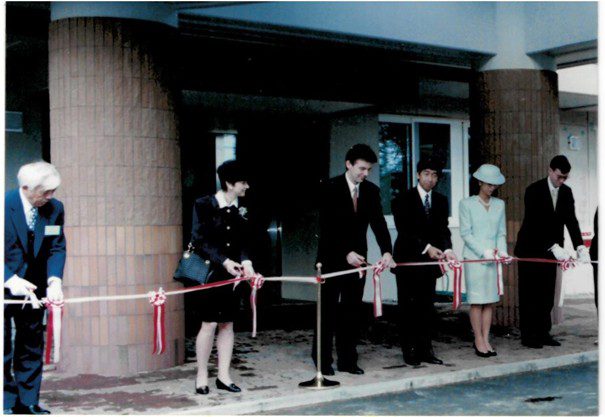
This photograph was taken at the inauguration of the Pető method institution in Hokkaido, in 1999. From left to right: Murai sensei, Erika, myself, Prince and Princess Takamado, the institution’s leaders, and the mayor of the city.